
Werner Beierwaltes
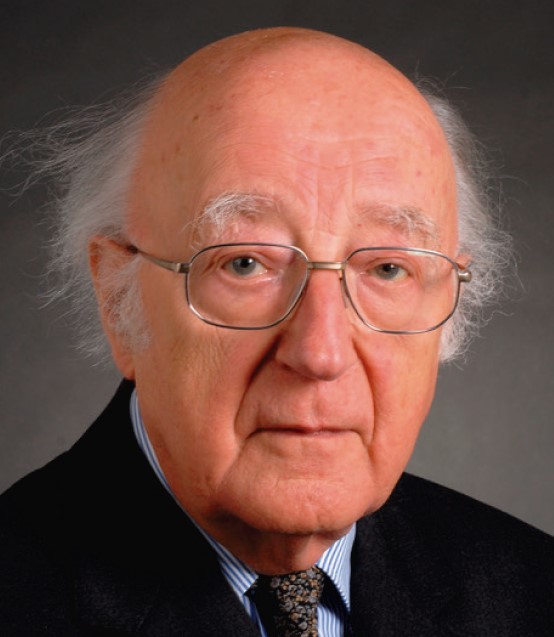
Dr. Beierwaltes was inducted posthumously into the Honorary Council of the Areopagiticum Foundation with the authorisation of his heirs.
Werner Beierwaltes (1931-2019) was an eminent German philosopher and professor who devoted his career to the study of Neoplatonism and its influence on Western philosophy. Throughout his work, Beierwaltes investigated how Platonic thought, as developed by the Neoplatonists, exerted a profound influence on both Christian theology and German Idealism. A central concept in his work was the relationship between identity and difference, a reflection he developed from his studies of philosophers such as Plotinus, Proclus, Augustine, Eriugena, Eckhart, Cusanus and Bruno, reaching as far as Schelling and Hegel.
For Beierwaltes, multiplicity and difference cannot be understood without a fundamental identity which, in turn, either unfolds into instances of difference or carries an inner difference within itself. His work also stands out for its reflections on the metaphysics of light and on the relationship between time and eternity, as well as for his interpretation of art as a reflection of absolute beauty.
Beierwaltes’ academic career was as extensive as it was prolific, and he was recognised both for the depth of his thought and for the scholarly rigour of his research. In the Spanish-speaking world he was honoured with an honorary doctorate and the Roncesvalles Prize in Philosophy, both awarded by the University of Navarra. His intellectual legacy remains an essential point of reference for the study of Neoplatonism and its influence on contemporary philosophy, and it has been widely discussed in numerous studies and volumes devoted to his work.
Werner Beierwaltes and the Yearning for Transcendence
Douglas Hedley
In memoriam
María Jesús Soto-Bruna
Brief profile of Werner Beierwaltes and his work
The study of the history of philosophy can be conceived as the task of an antiquarian. Just as a museum piece is examined, texts removed from us by several centuries are reread. Another possibility is to ignore their context and simply focus on the arguments, provided that they can be construed as rational and spark some debate with current philosophy. Without disparaging such perspectives, there is a way of making the study of the history of philosophy a philosophical question framed within a context of discussion. This mode is one that seeks a critical and productive appropriation of a thought from another time, while also offering something to think about in the present. To do history of philosophy in this way is to do a type of philosophy in which thought knows itself in time and recognizes itself in the evolution of concepts that constantly take on new forms. Werner Beierwaltes (1931-2019) has enriched the perspective of dozens of historians of philosophy by granting us the daring to philosophize. The vitality that emerges from his texts reveals the pulse of a philosopher who carries out his task by approaching the philosophical tradition on the basis of concepts that are understood historically. The One, the multiple, relational unity, identity, difference, alterity, dialectics, negation, anagogy are all rethought within the framework of the reconstruction of a philosophical tradition: the Platonic tradition. The path chosen is not the presentation of the thinkers and their time, but rather that of the history of concepts. This hermeneutical praxis applied to concepts –which does not avoid, on occasion, the reference to the Gadamerian notion of horizon– is, for Beierwaltes, the very praxis of philosophy.
His first work, Lux intelligibilis Untersuchungen zur Lichtmetaphysik der Griechen, written as a doctoral dissertation in the 1950s, already bears this imprint: a concept, that of intelligible light, and a perspective, as outlined in its subtitle: investigations that reveal that what he calls a “metaphysics of light” took form among the Greeks.’¹ From then on, important monographic studies followed, all thetic and displaying the imprint of his work: to bring to the fore a continuity that starts with Plato and extends, in first place but not the last one, to his late antique followers, the so-called “Neoplatonists”. To them he dedicates two first essential studies: Proklos. Grundzüge seiner Metaphysik (Frankfurt, 1965), and Plotin. Über Ewigkeit und Zeit (Enneade III 7). Übersetzt, eingeleitet und kommentiert (Frankfurt, 1967). The strength of Beierwaltes’ thought lies precisely in not ending the history of Platonism in Neoplatonism and in the shutting down of the Academy of Athens by Justinian in the year 529, and in constructing instead a prolonged and transformed Platonism that extends to the dawn of contemporary thought and beyond. His perspective is not chronological but conceptual. This thesis of unusual power finds its first formulation in the foundational Platonismus und Idealismus (Frankfurt, 1972). In this book, he presents both philosophical traditions –Platonism and idealism– in continuity, highlighting that the link between them would not be possible without the redefinitions of Christian Platonism by authors such as Augustine of Hippo and Meister Eckhart. Many works have followed since, some focusing on particular authors, others dealing with broader subjects. The list of articles, chapters, books, and translations of his books amount to more than a hundred texts. I will limit myself to mentioning those that, in my opinion, illustrate the spirit that animates his entire work. Identität und Differenz. Zum Prinzip cusanischen Denkens (Frankfurt, 1980) cannot be omitted from this paradigmatic list. The subtitle of the book may mislead us into believing that it is a study only of the thought of Nicholas of Cusa, when in fact it is a monumental book in which Beierwaltes reconstructs the history of these concepts –identity and difference– from their Greek expressions in Plato, Proclus and Dionysius the Areopagite, through their continuity in the late antique Latin world with Victorinus and Augustine, in the late Middle Ages with Meister Eckhart, at the threshold between two eras with the formulations of Cusanus and Giordano Bruno, their subsequent transformation in the thought of Schelling and Hegel, and up to identity as a negative distinction in Adorno. Not to be overlooked is a sort of final chapter or appendix in which Beierwaltes undertakes a sharp critique of the Heideggerian reading of the history of Western metaphysics as forgetfulness of Being. The very title of the book references the homonymous one by Heidegger, but here it is Beierwaltes who denounces Heidegger’s forgetfulness: that of the late antique and medieval Neoplatonic tradition. The examples offered by Beierwaltes range from the Plotinian One, that is considered beyond Being, to the Cusan notions of the Absolute as idem, non aliud and possessest —concepts that far from hiding Being behind an entity, understand it in its full pureness as principle, means and end of any entitative possibility. This true masterpiece is complemented and completed by equally indispensable texts, in which he revisits in particular some of the authors of this tradition, always from the perspective of the history of Platonism: writings on Nicholas of Cusa (“Visio absoluta. Reflexion als Grundzug des göttlichen Prinzips bei Nicolaus Cusanus”, in Sitzungsberichte der Heidelberger Akademie der Wissenschaften, 1978; “Visio facialis. Sehen ins Angesicht. Zur Coincidenz des endlichen und unendlichen Blicks bei Cusanus”, in Sitzungsberichte der Bayerischen Akademie der Wissenschaften, 1988), on Marsilio Ficino (“Marsilio Ficinos Theorie des Schönen im Kontext des Platonismus”, in Sitzungsberichte der Heidelberger Akademie der Wissenschaften, 1980), on Augustine of Hippo (“Regio beatitudinis. Zu Augustins Begriff des glücklichen Lebens”, in Sitzungsberichte der Heidelberger Akademie der Wissenschaften, 1981), and, later, his essential monograph on the philosophy of John Scotus Eriugena (Eriugena. Grundzüge seines Denkens, Frankfurt, 1994).
A third comprehensive work tackles what is perhaps the fundamental concept that articulates his thought, the One: Denken des Einen. Studien zum Neuplatonismus und dessen Wirkungsgeschichte (Frankfurt, 1985). The so-called “Wirkungsgeschichte”, i.e., the history of the effects or influence of Neoplatonism, extends into the 20th century. Once again a concept is understood within several horizons: the “One” as the key to the relationship between identity and difference, insofar as it seems to be thought in the first place in connection with the multiple. As a matter of fact, according to Beierwaltes, we owe to Plato and his dialogue Parmenides the possibility of thinking the One without relation or difference; and to the derivations thereof in Neoplatonism, yet another possibility: that of thinking difference as an unfolding of the One, and the One itself as not only existing above all but also “in us”. Here too the potency of these ideas is worked out in the thought of medieval and Renaissance Christian authors: Pseudo-Dionysius, Boethius, Eriugena, the Chartreans of the 12th century, Bonaventure, Nicholas of Cusa, Marsilio Ficino, Pico della Mirandola and Giordano Bruno. The book closes again with a reflection on the Neoplatonic tradition and its actuality, with reference to the most important philosophers and philosophical problems of the last century: Adorno and Heidegger reappear, but there are also allusions to Peirce, Whitehead, Camus, Sartre, the philosophy of art, and contemporary dogmatism.
The above-mentioned works certainly make it clear that, in Beierwaltes’ understanding, Platonism could not have spread the way it did without the transformation or transmutation that Christianity wrought upon it. Such is the perspective articulated in Platonismus im Christentum (Frankfurt, 1998), a work written at the request of the great historian of philosophy Giovanni Reale, who undertook the publishing of all his books in Italian translation with the exception of his first work, the dissertation that is presented here. Platonismus im Christentum stands in critical dialogue with Endre von Ivánka’s book Plato Christianus. Beierwaltes’ thesis in this case points out that it is not a question of Christianizing Plato, or of tracing the emergence of something worthy of being called “Christian Platonism”; rather, it is a question of evaluating the presence of Platonism in those Christian thinkers who developed a true “philosophical theology”. Thus, philosophy and theology are not presented as mutually exclusive opposites, but as two movements that have a single object, the Absolute. The operation of Christian theology that redefines the One-God in relational and dynamic terms, making it uni-trine, is carried out within the horizon of philosophy. Platonism in Christianity is also philosophy in theology and theology in philosophy, in the manner of a hermeneutical circle that feedbacks on itself.
Also worth mentioning are two last books published in the final decade of our thinker’s life: Fussnoten zu Plato (Frankfurt, 2011) and Catena Aurea. Plotin, Augustinus, Eriugena, Thomas, Cusanus (Frankfurt, 2017). Both titles are eloquent and encapsulate the meaning of the totality of his production.
In the introduction to Fussnoten zu Plato, i.e., footnotes to Plato, Beierwaltes explicitly references Whitehead’s dictum, from which he draws inspiration, according to which all European philosophy would be nothing more than a series of footnotes to Plato’s work. Notwithstanding the fact that such a claim can and should be qualified –and, in fact, Beierwaltes himself does so by acknowledging the contributions of other philosophical traditions like Aristotelianism and Stoicism, or contents that are specific to Christian or Arab thought–, he finds in this dictum the occasion to justify his own path. It is worth quoting his own words:
In many of my books and essays, I have addressed the wealth of perspectives of the history of influence [Wirkungsgeschichte] of Platonic thought, primarily in its Neoplatonic form, and considered it in its unity and internal difference. I have always included in this area of philosophical reflection the question of the relationship between Greek metaphysics and Christian theology, i.e., the question of the transformation and productive ulterior determination of philosophical thought and the difference between the (theological) outcome and its conceptual origins and the impulses emanating from it. […] Taken as a whole, the “the footnotes to Plato” gathered in this book represent “metamorphoses” of genuinely Platonic philosophy into a new thought, which at the same time lives essentially from its origins. […] “Footnotes” do not sink beneath the text, as if they were only spoken aside; they are more like “dwarfs sitting or standing on the shoulders of giants”: although they are smaller than the latter, they see more and further, they grasp and understand –each one within the “series” differently and individually– the original thought-potential in its developmental capacity, sometimes even with greater intensity and circumspection than would be possible for the “giants” due to their own historical position. However, this sitting or standing of the dwarfs on and above the shoulders of the giants does not entail an arrogant self-confidence, but is a gift of time.²
Beierwaltes’ enlightening words not only apply to the thinkers he has dealt with, constituting a kind of catena aurea or an invisible golden thread or chain that joins them through history, but also help us value his own philosophy as part of that chain and as a gift offered to our time from the shoulders of those giants.
It should be added that Beierwaltes pursued his academic career while of teaching at the universities of Wurzburg, Munster, Freiburg and Munich. He was thus able to enrich his research through his activity as a lecturer, and granted the opportunity –perhaps one of the highest– to put his theses to the test by thinking while conveying the results of his research. In 1996 he was distinguished with the Doctor honoris causa from the Ioannina University (Greece). His works have been translated into various languages.
On a personal note, I would like to add that I have had the opportunity to listen to Beierwaltes in person at several congresses of the Cusanus-Gesellschaft. His erudition and wisdom were on par with his affability and generous disposition toward young scholars. I also had the opportunity to listen to him play the organ: he was an excellent keyboard player who found in art, not only through theoretical reflection on it but also through its praxis, a way of ascent to the Absolute, about the existence of which he had no doubts.
I would like to close this brief presentation by making reference to something that Giovanni Reale brings up in the “Introduction” to the Italian translation of Denken des Einen, and which reveals Beierwaltes’ vital commitment to philosophy. Reale recounts that when he presented him with the proposal to render the title of the work in Italian as Pensiero dell’ Uno, Beierwaltes insisted on changing it to Pensare l’ Uno. The title, as he had conceived it, should sound like a kind of exhortation: we must think the One! This was for Beierwaltes the imperative task in which every human being should be engaged: to think and realize unity in all spheres.³ His life and work are an invitation to do so.
Claudia D’Amico
Dr. in Philosophy, Ordinary Professor of Medieval Philosophy at the University of Buenos Aires and the National University of La Plata; Principal Researcher, CONICET, Argentina.
__________________________
¹ I shall not discuss its content here, as Enrico Peroli will elaborate on it in the introduction to the book.
² W. Beierwaltes, Fussnoten zu Plato, Frankfurt am Main, Klostermann, 2011, pp. VIII-IX [our translation —Trans.].
³ Cf. G. Reale, ‘Introduzione’, in Pensare l’ Uno, Milano, Vita e Pensiero, 1991, p. 20.