
THE ADMIRABLE HUNTER
NICHOLAS OF CUSA
AND THE SOURCES OF THE PLATONIC TRADITION
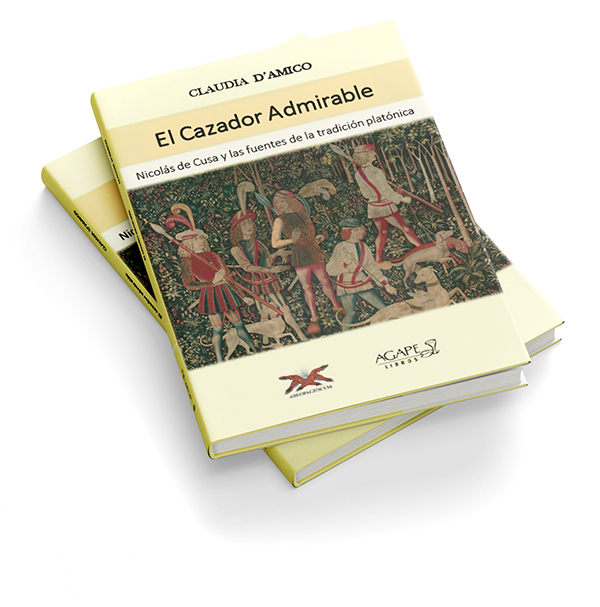
The challenge of this book is to place some fundamental topics of the philosophy of Nicholas of Cusa –whose life and work spanned the first half of the fifteenth century– in the context of a novel and at the same time already well-trodden Christian appropriation of Platonism.
The title alludes to an epithet that Cusanus used in one of his last works to refer to Plato: mirabile venator, admirable hunter. The hunter who pursues his prey, wisdom itself, and has gotten as far as he was able. But he is no solitary hunter; rather, he roams the fields where wisdom may lurk in the company of his many derivations or explicationes. It is he and the tradition initiated by him –not without its own forerunners, as will be seen– and developed over centuries.
I intend to paint a picture in which the most vivid and fundamental colors of Cusanus’ philosophy can be made out clearly, and to show the extent to which they stem from the deepening –and in some cases recovering– of certain themes offered by the Platonic tradition that took shape from Late Antiquity to his own time. Even though there is criticism of “Plato” and “the Platonists”, Cusanus still considers himself part of that tradition. Nothing is more eloquent than a marginal note by his own hand that can be found in one of the manuscripts in his library containing Proclus’ Theologia Platonica, which reads: nota nostra familia.

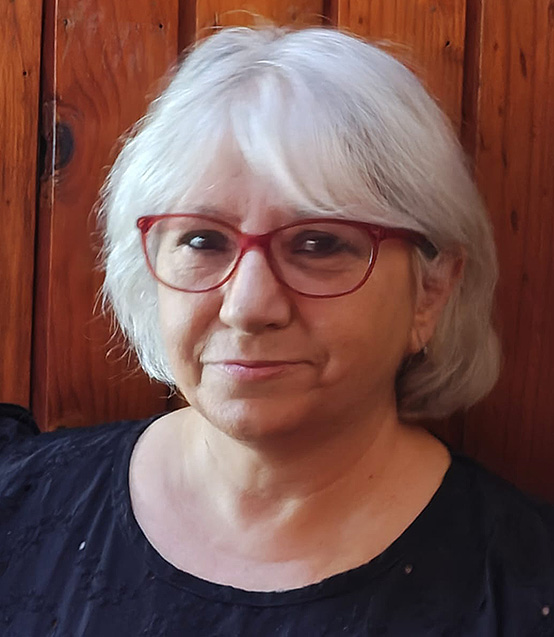
Claudia D’Amico
is Professor of Medieval Philosophy at the University of Buenos Aires (UBA) and the National University of La Plata (UNLP), Principal Researcher at the National Scientific and Technical Research Council of Argentina (CONICET) and Editor-in-chief of the journal Patristica et Mediaevalia. Her area of expertise is the Platonic tradition in the Middle Ages. She has written books, book chapters and articles on this subject, and has taught courses and given lectures as a visiting professor at several foreign universities.
Since 1999 she has directed the Circle of Cusan Studies of Buenos Aires, which she founded together with Jorge M. Machetta under the auspices of Klaus Reinhardt, then director of the Cusanus-Institut (Trier, Germany). Between 2011 and 2015, she chaired the Ibero-American Society of Neoplatonism and she has served on the advisory board of the Cusanus-Gesellschaft since 2016. She is currently the representative for Latin American at the FSA (Foro Studi Avanzati-Gaetano Mazza), which focuses on classical philosophy from Antiquity to the Renaissance.